
Last Updated: October 23, 2026
Quick Summary
Hidden luxury vehicle damage can be spotted by inspecting paint for mismatches, checking door gaps and panel alignment, testing mechanical systems, and looking for frame damage indicators like uneven tire wear or steering wheel misalignment. Luxury vehicle repairs cost significantly more than standard cars, with minor damage exceeding $2,000, making thorough inspection essential before driving off the lot.
- Take photos and videos of the entire exterior, interior, and engine bay before leaving the rental lot to protect yourself from liability disputes.
- Frame damage shows specific warning signs including uneven door gaps, misaligned body panels, wheels pointing in different directions, and steering wheel off-center when driving straight.
- Request a vehicle history report from the rental company before renting to identify previous accidents, frame damage repairs, flood damage, and other major issues.
- A thorough inspection takes 15-20 minutes and should cover paint condition, glass and lights, tires and wheels, undercarriage, seats, dashboard, engine bay, and all mechanical functions.
- If you discover damage before driving, do not operate the vehicle and immediately notify the rental company to request a replacement vehicle in writing.
Table of Contents
- Why Hidden Damage Matters on Luxury Rentals
- Complete Luxury Rental Car Inspection Checklist
- Signs of Hidden Frame Damage You Can’t Miss
- How to Document Rental Car Damage Properly
- Using Vehicle History Reports to Identify Accident Damage
- What to Do If You Discover Damage Before Driving
- Frequently Asked Questions
Why Hidden Damage Matters on Luxury Rentals
When you rent a luxury vehicle, you’re expecting pristine condition. But hidden damage can turn a premium experience into a costly nightmare. Spotting hidden luxury vehicle damage before you drive off the lot protects your wallet and your peace of mind.
Luxury vehicles like BMWs, Jaguars, and Range Rovers come with higher repair costs. A small dent on a regular sedan might cost $500 to fix. The same damage on a luxury car can exceed $2,000. Frame damage is even worse, it can total a vehicle.
At Happy Hand Car Rental Service, we maintain our fleet meticulously. Understanding what to look for gives you control over your rental experience.
The key is knowing where damage hides. Most renters only check obvious spots. They miss the areas where damage typically occurs. This guide shows you exactly where to inspect and what signs indicate real problems.
Always photograph the vehicle’s condition before leaving the lot. Take images of the entire exterior, interior, and engine bay. These photos protect you if disputes arise later.
Complete Luxury Rental Car Inspection Checklist
A thorough inspection takes 15-20 minutes. It’s time well spent. You’ll catch most issues before they become your responsibility.
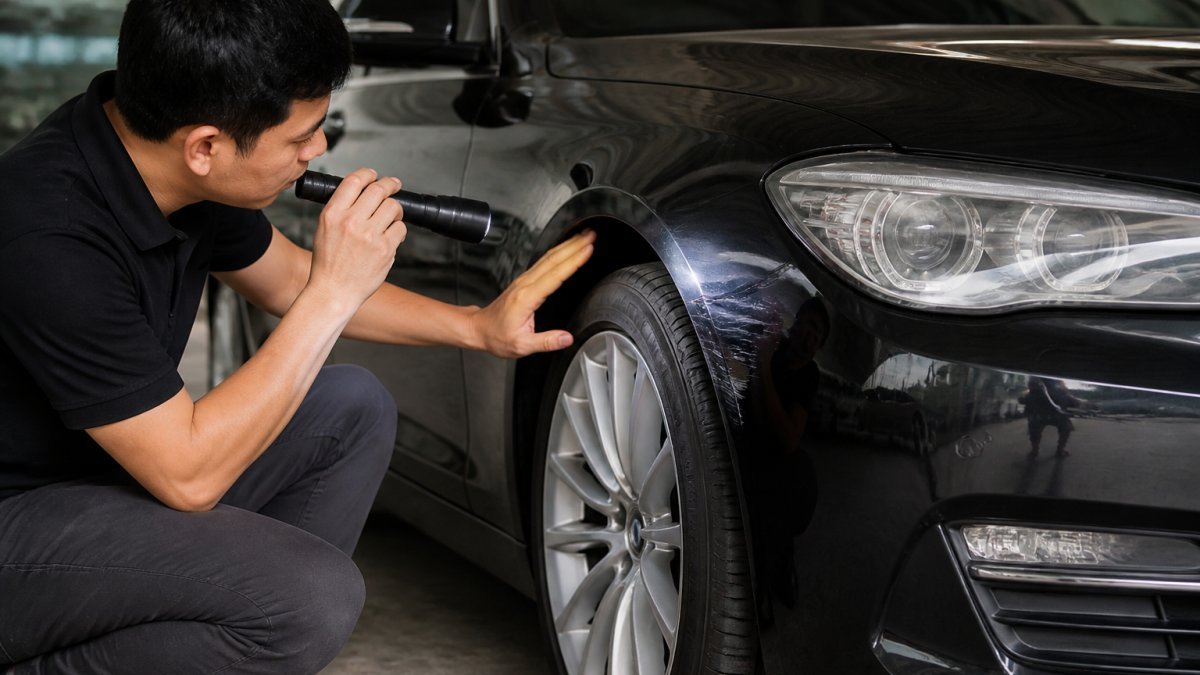
Start outside. Walk the entire perimeter. Look at every angle. Lighting matters, inspect in daylight if possible. Shadows hide damage.
Exterior Inspection Points
Check these areas systematically:
Paint and Body
- Look for mismatched paint colors (sign of repainting)
- Run your hand along panels to feel for dents or uneven surfaces
- Check all four sides, roof, and hood
- Inspect bumpers for cracks or discoloration
- Look at door handles and trim pieces
Glass and Lights
- Examine all windows for chips or cracks
- Check headlights and taillights for moisture or damage
- Look at mirrors for cracks or loose mounting
Tires and Wheels
- Inspect tire tread depth (should be adequate for safe driving)
- Check for uneven wear patterns (suggests alignment issues)
- Look for curb rash on wheel rims
- Verify all four tires match in condition
Undercarriage
- Crouch down and look underneath for damage
- Check for fluid leaks on the ground
- Look at suspension components for bending or damage
Interior and Mechanical Systems
Seats and Upholstery
- Check for tears, stains, or burns
- Inspect leather for cracks or peeling
- Look at seat stitching for damage
Dashboard and Controls
- Test all buttons and switches
- Check the steering wheel for damage
- Look at the dashboard for cracks
- Verify the odometer reading
Engine Bay
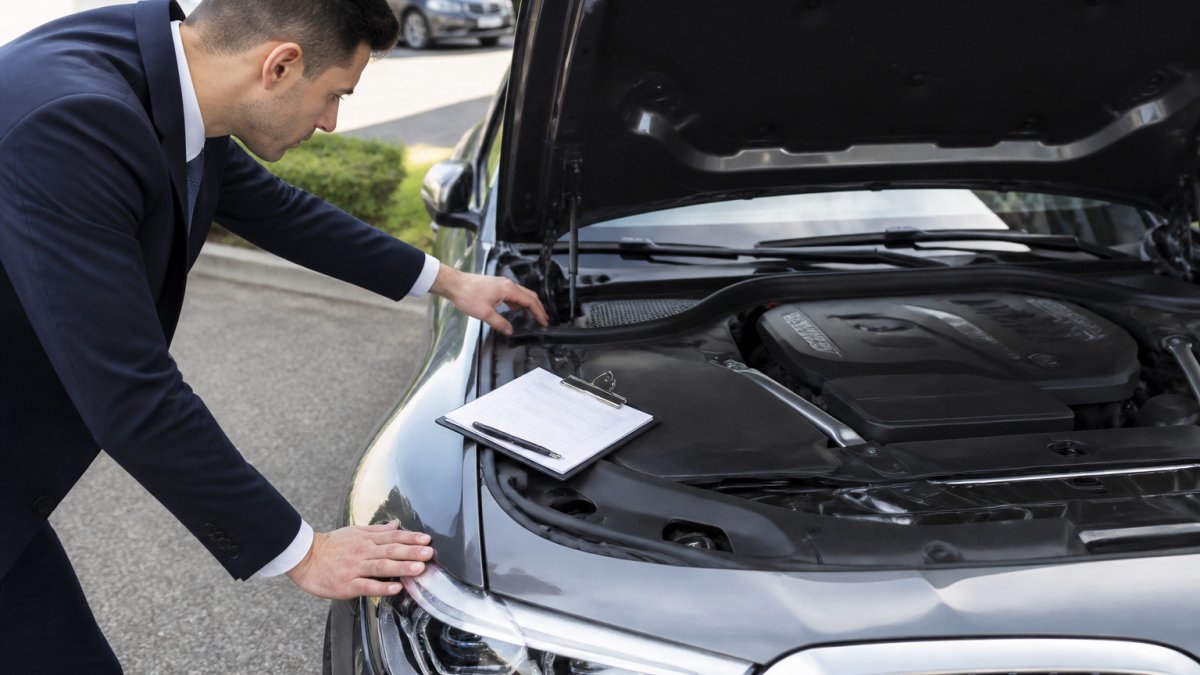
- Open the hood and inspect the engine
- Look for fluid leaks or stains
- Check hose connections
- Verify fluid levels (oil, coolant, brake fluid)
- Look for bent or damaged components
Mechanical Function
- Start the engine and listen for unusual sounds
- Test all lights (headlights, brake lights, turn signals)
- Check windshield wipers
- Test air conditioning and heating
- Verify all windows roll up and down smoothly
- Test the brake pedal for firmness
- Check steering responsiveness
If the engine makes grinding, knocking, or rattling sounds, do NOT drive the vehicle. These indicate serious mechanical problems. Report it immediately and request a replacement.
Signs of Hidden Frame Damage You Can’t Miss
Frame damage is the most serious issue. A bent frame affects how the vehicle handles and can compromise safety. Spotting it early matters.
Physical Indicators of Frame Damage
Look for these telltale signs:
- Uneven door gaps (doors that don’t close smoothly or have gaps that don’t match on both sides)
- Misaligned body panels (hood, trunk, or side panels sit unevenly)
- Wheels that point in different directions (toe-in misalignment)
- Uneven tire wear in a specific pattern
- Steering wheel that’s off-center when driving straight
- Vehicle pulls to one side when braking
- Squeaking or creaking sounds when turning corners
- Paint overspray on rubber seals or plastic trim
How Frame Damage Happens
Most frame damage comes from accidents. But it can also result from:
- Hitting a curb hard while parking
- Side-swipe collisions
- Rear-end impacts
- Front-end collisions
Even minor accidents can bend frames on luxury vehicles. The damage might not be visible at first glance.
If you notice the steering wheel is off-center, the vehicle pulls to one side, or doors don’t close evenly, the frame is likely damaged. Request a different vehicle immediately.
Frame damage produces specific warning signs that indicate serious structural problems.
| Warning Sign | What It Indicates |
|---|---|
| Uneven door gaps or doors that don’t close smoothly | Frame misalignment |
| Misaligned body panels (hood, trunk, side panels) | Bent frame structure |
| Wheels pointing in different directions | Toe-in misalignment from frame damage |
| Steering wheel off-center when driving straight | Frame damage affecting alignment |
| Vehicle pulls to one side when braking | Frame or suspension damage |
| Squeaking or creaking sounds when turning corners | Frame stress or suspension issues |
| Paint overspray on rubber seals or plastic trim | Previous frame repair work |
How to Document Rental Car Damage Properly
Documentation protects you. It creates a record of the vehicle’s condition when you rented it. This prevents disputes later.
What to Document
Take photos and videos of:
- All exterior surfaces (front, back, both sides, roof)
- Interior condition (seats, dashboard, carpets, door panels)
- Engine bay condition
- Tire condition and tread depth
- Any existing damage you notice
- The odometer reading
- The fuel level
How to Document
Use your smartphone. Modern phones have excellent cameras. Take photos in natural light. Avoid shadows.
For each area:
- Take wide shots showing the entire surface
- Take close-up shots of any damage
- Take photos from multiple angles
- Record the date and time (your phone does this automatically)
Video is even better. Walk around the vehicle slowly while recording. Narrate what you see. This creates an undeniable record.
Where to Store Documentation
Save photos and videos in multiple places:
- Your phone’s cloud storage (iCloud, Google Photos)
- Email them to yourself
- Upload to a cloud service (Dropbox, OneDrive)
- Print photos if you prefer physical copies
This redundancy ensures you can access documentation later if needed.
Using Vehicle History Reports to Identify Accident Damage
Vehicle history reports reveal past accidents. They show insurance claims, frame damage repairs, and other major issues. These reports are valuable tools.
What Reports Show
Reports like Carfax or AutoCheck document:
- Previous accidents and damage claims
- Insurance claim history
- Frame damage repairs
- Flood damage
- Title issues
- Service records
How to Get Reports
Ask the rental company for a vehicle history report before you rent. Many legitimate rental services provide this. If they refuse, that’s a red flag.
You can also request reports yourself through Carfax or AutoCheck. Some services charge a small fee. The information is worth it.
What to Look For
When reviewing a report, check for:
- Multiple accident claims (suggests recurring issues)
- Frame damage notation (major concern)
- Flood damage history (affects mechanical reliability)
- Frequent repairs in short timeframes (indicates problems)
- Title issues (suggests previous major damage)
A clean history doesn’t guarantee the vehicle is perfect. But a problematic history should make you reconsider renting that specific vehicle.
What to Do If You Discover Damage Before Driving
You’ve completed your inspection. You found damage. What now?
Immediate Steps
-
Do not drive the vehicle. Operating a damaged vehicle can make the situation worse and create safety risks.
-
Notify the rental company immediately. Call or speak to the agent at the rental location. Report exactly what you found.
-
Document the damage. Take photos and videos while you’re still at the lot. Have the rental agent note the damage in writing.
-
Get a replacement. Request a different vehicle of equal or better quality. Reputable rental companies will accommodate this.
-
Get written confirmation. Ensure the rental agreement reflects that the original vehicle was damaged and a replacement was provided. This protects you from liability for pre-existing damage.
If the Company Resists
Some rental companies push back. They might claim the damage is minor or your responsibility. Stay firm.
Happy Hand Car Rental Service handles this situation professionally. If you discover damage, we replace the vehicle. This is part of our commitment to providing well-maintained, high-end vehicles for your business or leisure travel.
If another rental company resists, consider these options:
- Request the manager’s contact information
- File a complaint with your credit card company (they often side with renters on vehicle disputes)
- Contact your travel insurance provider (many policies cover rental vehicle disputes)
- Leave detailed reviews documenting your experience
Inspecting a luxury rental vehicle thoroughly protects you from unexpected costs and safety issues. Hidden damage is real, but it’s preventable when you know where to look. By following this checklist, documenting conditions carefully, and reviewing vehicle history reports, you’ll rent with confidence. When you book with Happy Hand Car Rental Service, you get a fleet maintained to the highest standards, but taking these inspection steps ensures your peace of mind on every rental. Book your next luxury vehicle with us and experience the difference professional maintenance and transparent service make.
Frequently Asked Questions
How can you tell if a luxury car has hidden accident damage?
Look for mismatched paint colors or texture variations between panels using a flashlight at different angles. Check door gaps and alignment, uneven spacing indicates previous bodywork. Inspect the undercarriage for fresh welds, new fasteners, or replaced components. Request a vehicle history report to verify accident records. Run your hand along seams and panel edges to feel for filler or overspray. On luxury vehicles like BMWs and Jaguars, any deviation from factory precision is a red flag.
What are the signs of hidden frame damage on a luxury rental vehicle?
Frame damage often appears as steering wheel misalignment, uneven tire wear, or doors that don’t close smoothly. Check for ripples or waves in the hood, roof, or trunk. Inspect suspension components for fresh paint or replacement parts. Listen for unusual noises during a test drive, clunks or creaks suggest structural issues. Look under the vehicle for bent frame rails or welded seams that don’t match the original factory welds. These signs indicate the vehicle has experienced significant impact beyond cosmetic damage.
Should you get a luxury car inspected before renting it?
Yes, a thorough pre-rental inspection protects you from liability for pre-existing damage. At minimum, conduct your own visual inspection using the provided checklist and take timestamped photos of every angle. Request the rental company’s maintenance records and recent service history. For high-value rentals or extended trips, consider requesting a professional pre-rental inspection through a third-party mechanic. This documentation is essential if damage disputes arise after your rental period ends.
How do you document existing damage on a rental car properly?
Take photos and videos in natural daylight from multiple angles, including close-ups of any scratches, dents, or discoloration. Capture the odometer reading and fuel level. Document the date, time, and weather conditions. Note any damage on the rental agreement before signing, get the rental company to initial your notes. Keep copies of all photos, videos, and signed documents. For significant damage, request a written condition report from the rental company. This documentation protects you if the company tries to charge you for pre-existing damage.